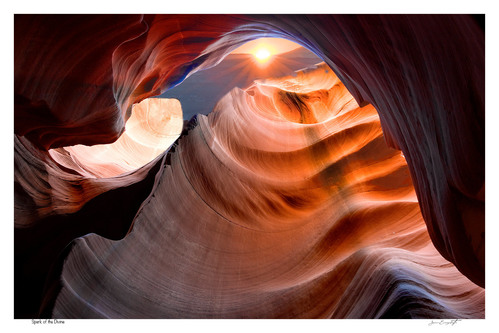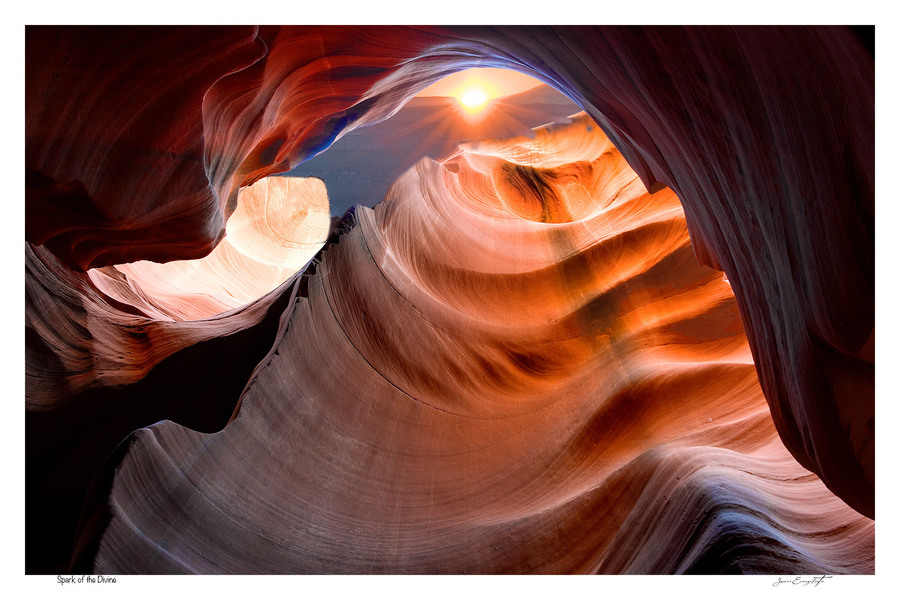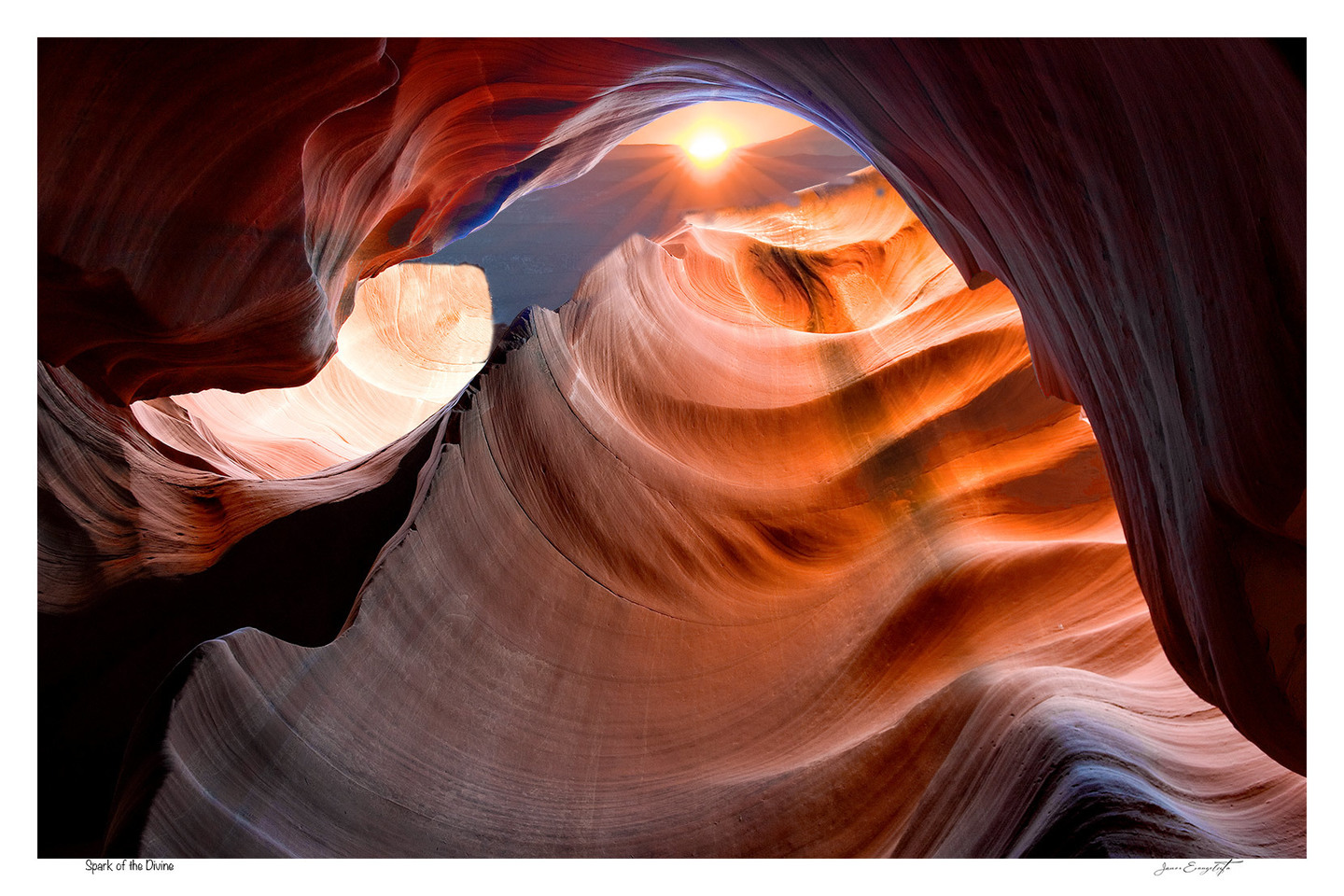
In the subterranean stillness, a single human breath, briefly joining a place whose only enduring architects have been water, wind, and time. At the mouth of the sandstone canyon, the entrance is a sudden vertical fracture in the desert floor. Before we step inside, Vera pauses at the threshold. The old people, she tells us, never entered these shadows casually. They stopped here first to quiet the mind, preparing themselves to enter a place that required humility, so they might return to the sunlight in balance with the world. The Navajo call this place Tsé bighánílíní—the place where water runs through rocks. We leave the pale sun behind and descend into the earth. The walls rise more than a hundred feet above the dry wash, their sandstone sculpted by vanished torrents into flowing ribbons of amber, ochre, and deep violet. Every curve bears the memory of water. Every narrowing reminds us that absence can be a sculptor as patient as time.